-
Interactive DashboardsCreate interactive BI dashboards with dynamic visuals.
-
End-User BI ReportsCreate and deploy enterprise BI reports for use in any vertical.
-
Wyn AlertsSet up always-on threshold notifications and alerts.
-
Localization SupportChange titles, labels, text explanations, and more.
-
Wyn ArchitectureA lightweight server offers flexible deployment.
-
 Wyn Enterprise 7.1 is ReleasedThis release emphasizes Wyn document embedding and enhanced analytical express...
 -
 Choosing an Embedded BI Solution for SaaS ProvidersAdding BI features to your applications will improve your products, better serve your customers, and more. But where to start? In this guide, we discuss the many options.
-
Visual GalleryInteractive sample dashboards and reports.
-
BlogExplore Wyn, BI trends, and more.
-
WebinarsDiscover live and on-demand webinars.
-
Customer SuccessVisualize operational efficiency and streamline manufacturing processes.
-
Knowledge BaseGet quick answers with articles and guides.
-
VideosVideo tutorials, trends and best practices.
-
WhitepapersDetailed reports on the latest trends in BI.
-
 Choosing an Embedded BI Solution for SaaS ProvidersAdding BI features to your applications will impr...
 -

- Getting Started
- Administration Guide
-
User Guide
- An Introduction to Wyn Enterprise
- Document Portal for End Users
- Data Governance and Modeling
- View and Manage Documents
- Working with Resources
- Working with Reports
-
Working with Dashboards
- Tour the Dashboard Designer
- Create a Dashboard
- Configure Dashboard
- Dashboard Data Binding
- Scenarios
- Appearance
- Component Management
-
Parameters
- Filter Dashboard Visualization by a Date Parameter
- Filter Dashboard Visualization by a Parameter-Bound Slicer
- Filter Dashboard Visualization by a Query-Based Parameter
- Use an Image to Reset a Parameter Filter
- Dynamically Filter a Chart Using a Parameter
- Dynamically Change the Date Format in a Chart Using a Parameter
- Pass Dynamic Parameter to Native Query Dataset
- Pass Dynamic Parameter to Direct Dataset
- Filter Scenarios Using Parameter-Driven Text and Date Range Slicers
- Interactions
- Finalize Your Dashboard
- Using AI in Wyn
- Working with Notebooks
- Wyn Analytical Expressions
- Section 508 Compliance
- Subscribe to RSS Feed for Wyn Builds Site
- Developer Guide
Filter Scenarios Using Parameter-Driven Text and Date Range Slicers
In dashboards with large categorical dimensions, binding slicers directly to dataset fields can introduce unnecessary performance overhead. Each slicer bound to a dataset triggers pivot queries at load time, which can significantly impact dashboard responsiveness—especially when dimension tables contain thousands or millions of values.
To address this, Wyn allows slicers to write values to parameters, which can then be used to filter visualizations without directly binding slicers to dataset fields. This approach enables flexible, user-driven filtering while avoiding the cost of loading and rendering large categorical lists.
The following example demonstrates how to filter a column chart by a value typed into a text slicer.
Scenario Overview
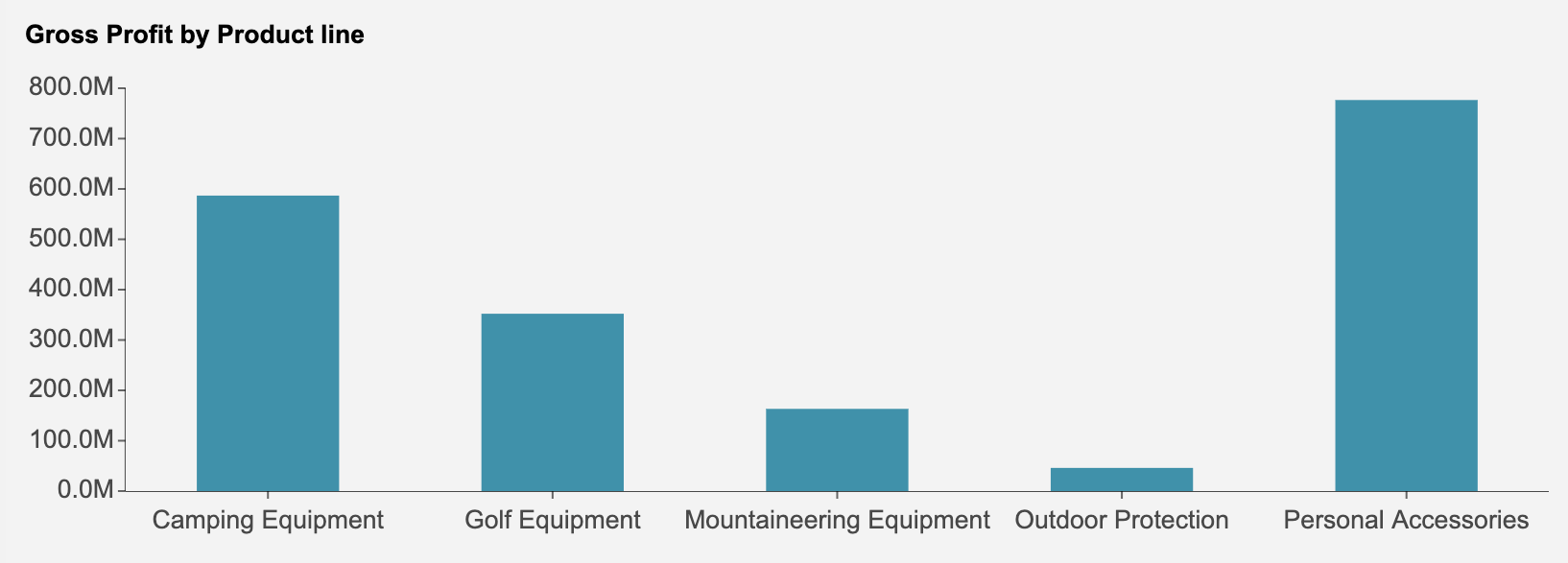
The column chart displays Gross Profit by Product Line, where the category axis contains values such as:
Camping Equipment
Golf Equipment
Mountaineering Equipment
Outdoor Protection
Personal Accessories
Instead of using a slicer bound to Product Line, the user types a value into a text box. That value is stored in a parameter and applied as a filter to the chart.
Step-by-Step Example
1. Create a Column Chart and Bind Data
Drag a Column Chart onto the dashboard canvas.
Bind:
A numerical field (for example, Gross Profit) to the Values slot.
A categorical field (for example, Product Line) to the Category Axis.
At this stage, the chart displays Gross Profit grouped by Product Line.
2. Add a Text Box Slicer
Drag a Text Slicer onto the dashboard.
This slicer will not be bound to any dataset field. It is used purely as a free-form input control.

3. Add a Parameter and Bind It to the Slicer
Open Dashboard Settings and navigate to General.
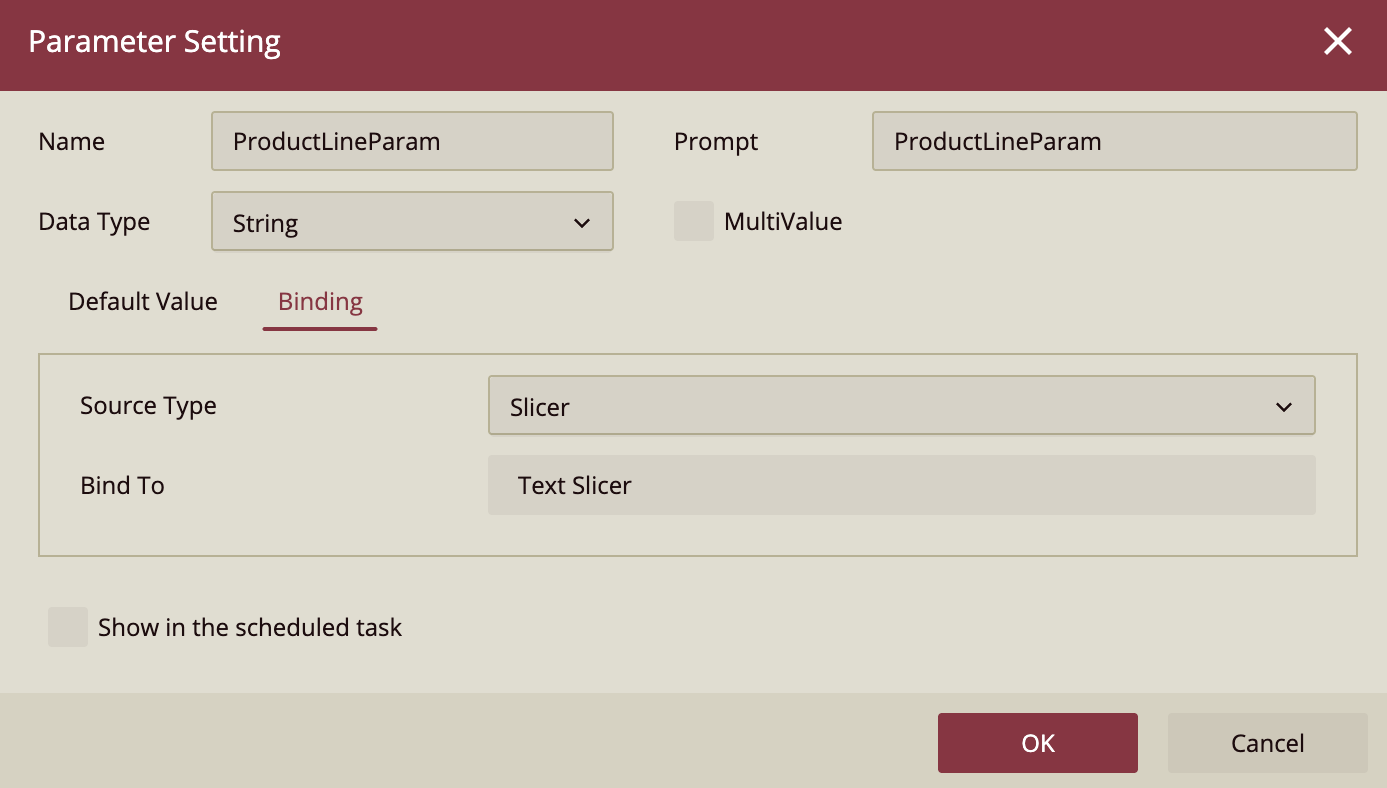
Create a new parameter (for example, ProductLineParam) with a String data type.
In the Binding tab:
Set Source Type to Slicer
Set Bind To to the Text Slicer
This configuration ensures that any value typed into the text slicer is stored in the parameter.
4. Apply the Parameter as a Filter on the Column Chart
Select the column chart and click the Filter icon.
Click Add + to create a new filter.
In the General tab, locate the search bar.
Click the pencil icon next to the search field.
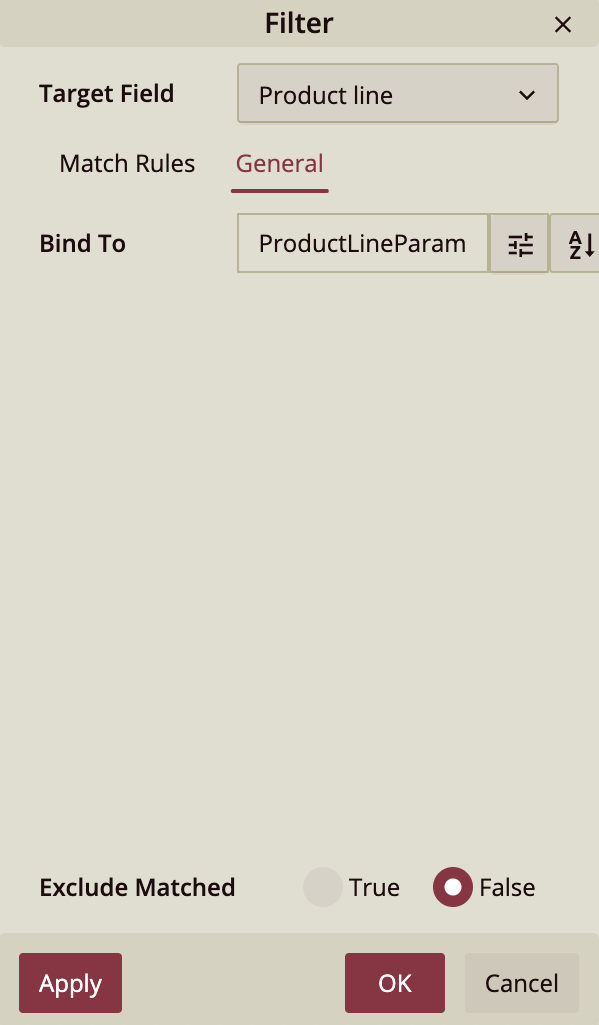
Select the parameter (
ProductLineParam) as the filter value.
Configure the filter so that the categorical field (Product Line) is compared against the parameter.
The chart now listens to the parameter instead of a dataset-bound slicer.
5. Preview and Filter the Chart
Switch to Preview mode.
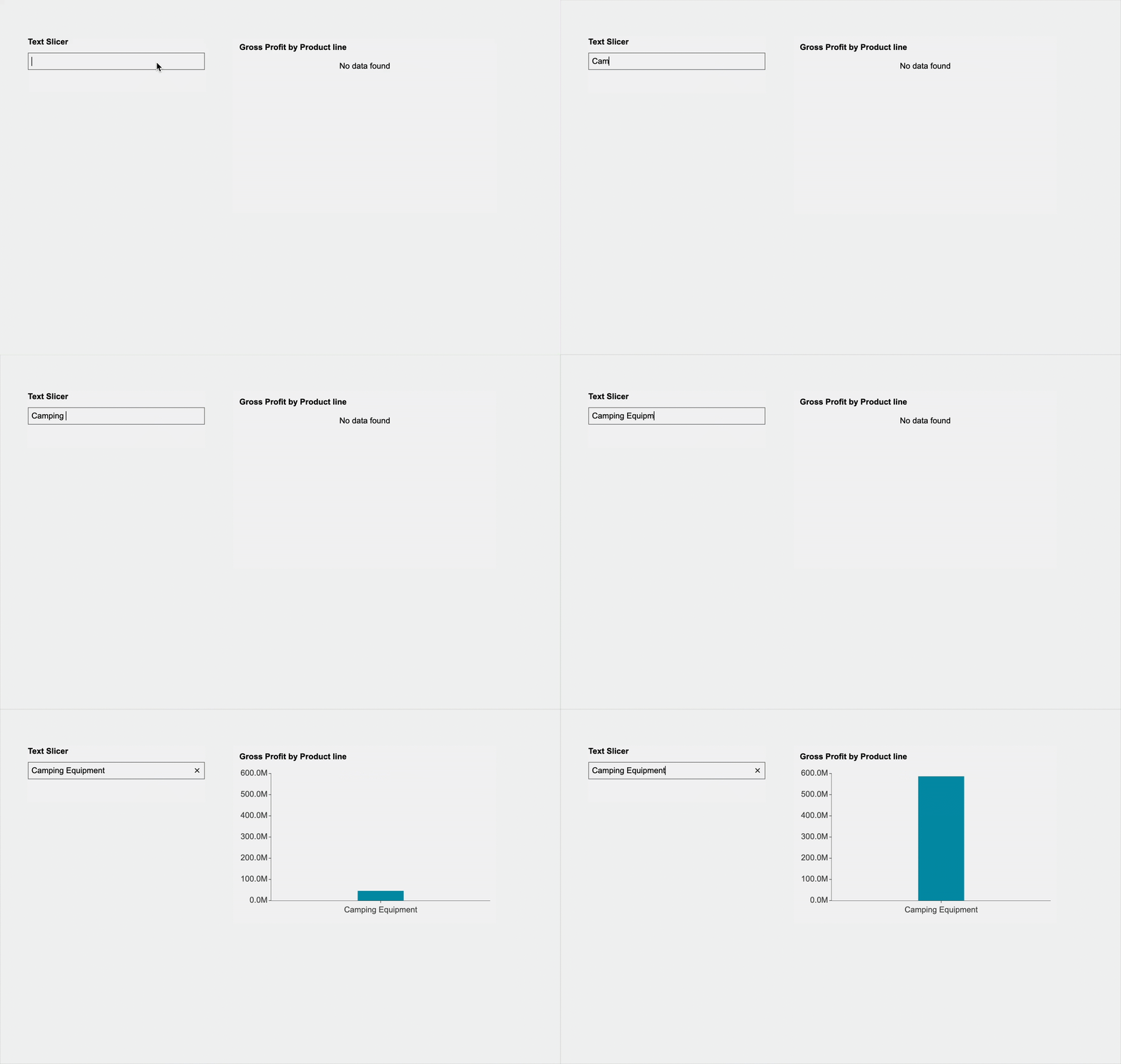
Type a value such as:
Camping Equipmentinto the text slicer.
The column chart updates to show only the matching Product Line.
No categorical slicer values are loaded, and no additional dimension pivots are triggered.
Applying the Same Pattern with a Date Range Slicer
This pattern also works with Date Range Slicers.
To do so:
Bind a date field to the chart’s category axis or filters.
Create a parameter bound to the Date Range Slicer.
Apply the parameter as a filter on the chart.
The selected date range is passed through the parameter and used to filter the visualization without directly binding the slicer to the dataset.